


Retort furnaces for nitriding, tempering, annealing – ZeroFlow
Modern, ammonia and energy-saving and ecological gas nitriding process used in VR/PVR type furnaces.
Nitriding and Ferritic Nitrocarburizing (FNC) furnaces.
ZeroFlow is a modern variant of controlled gas nitriding ensuring the maximal process effectiveness and efficiency, significantly exceeding the results of traditional solutions. It allows for precise shaping of any nitrided layer composition while maintaining minimal media consumption and post-process gas emissions, meeting the most stringent environmental protection regulations. This is especially important for mass production e.g., gears, pinions, brake discs etc., where the benefits of ZeroFlow technology will be most significant.
The uniqueness of the ZeroFlow technology lies in the fact that during the nitriding process, when the load does not absorb nitrogen from the atmosphere (e.g., during the reduction of nitrogen potential or in the diffusion phase), the introduction of ammonia into the furnace is completely stopped (zero flow) and the furnace remains tightly closed.
This is a unique feature of ZeroFlow technology and the horizontal type VR and pit type PVR furnaces as well as automated process lines. It enables the implementation of the most efficient nitriding processes, minimizing process duration, energy consumption, process gas consumption, and post-process gas emission.
Compared to traditional processes, ZeroFlow reduces ammonia and nitrogen consumption many times over, as well as gas emissions to the environment (up to 10 times), and at the same time contributes to energy savings.
It is a technology that protects the natural environment and supports sustainable development.
The ZeroFlow technology maintains full versatility of conventional gas nitriding while minimizing media consumption compared to competing technologies.
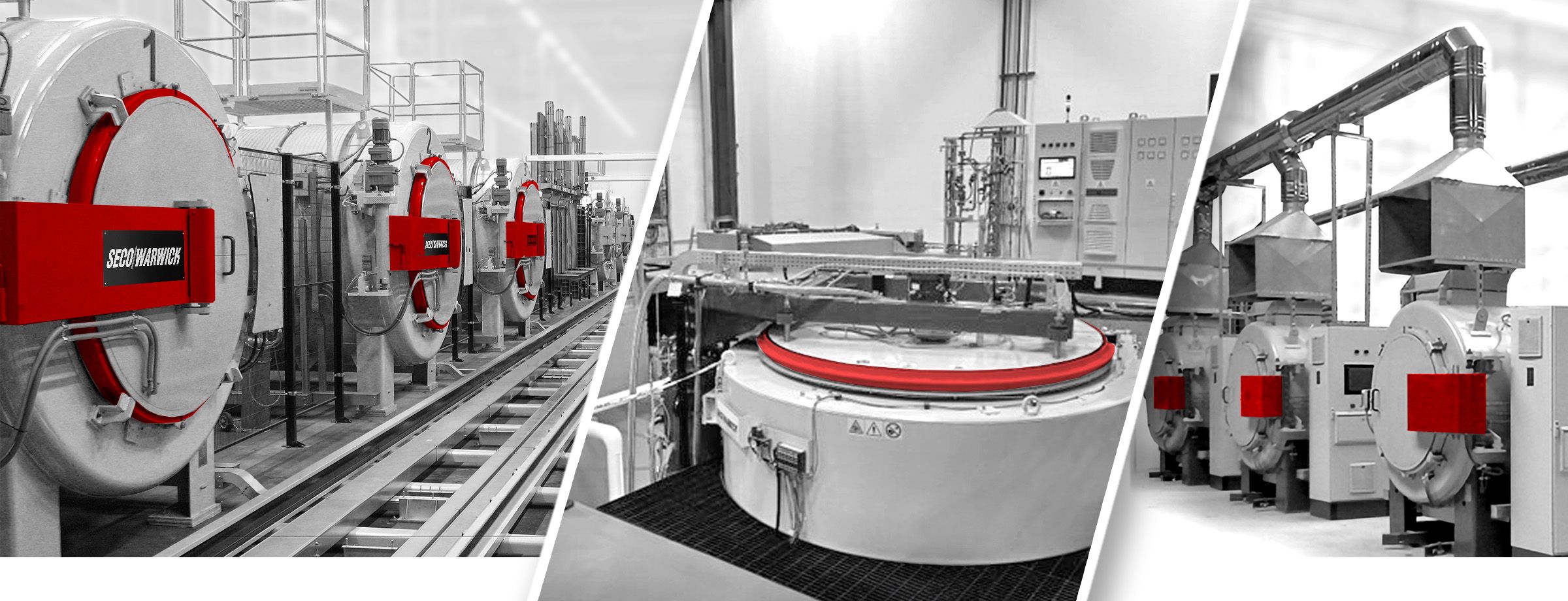
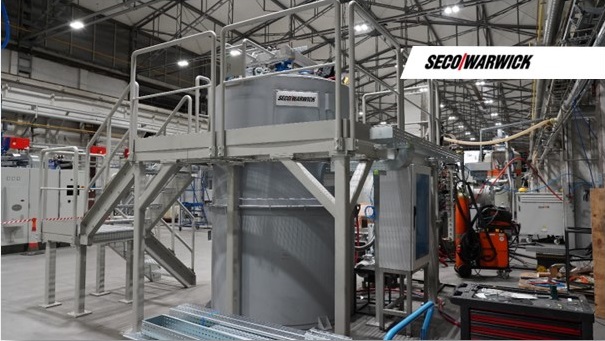
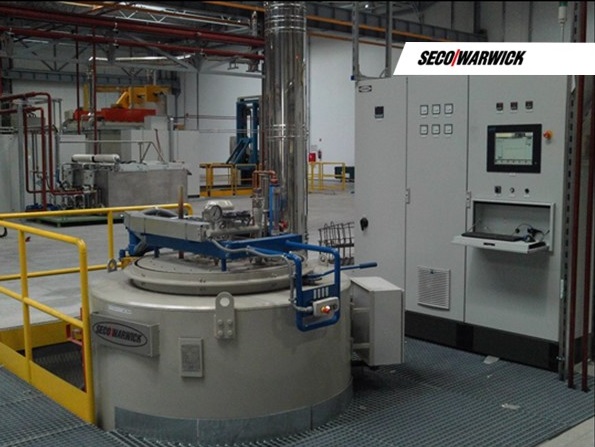
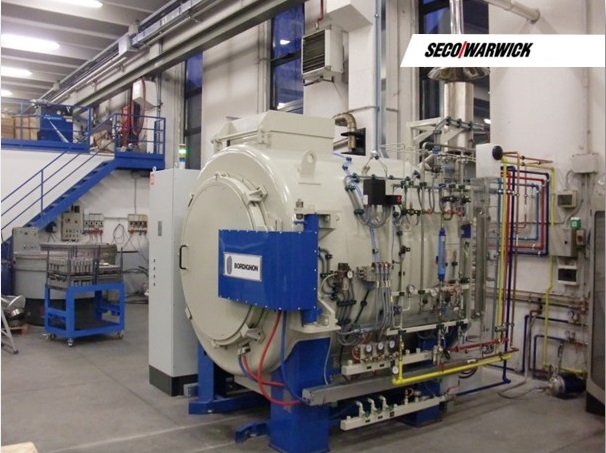
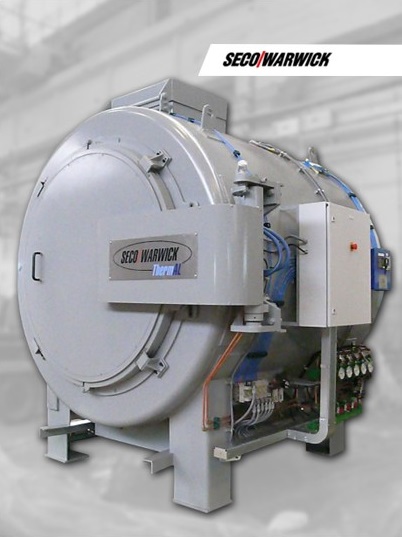
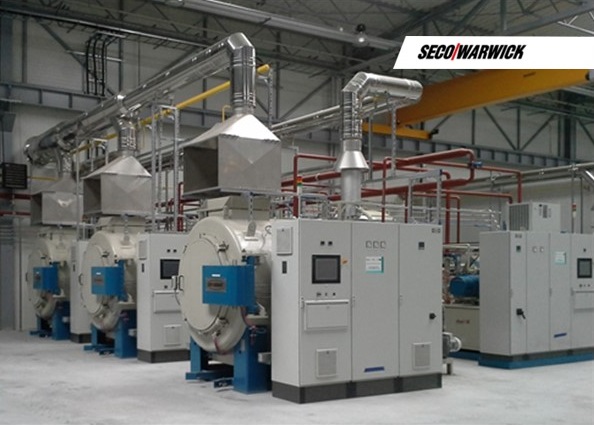
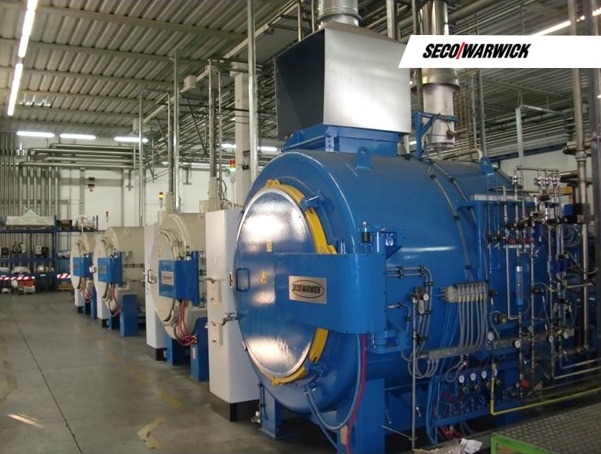
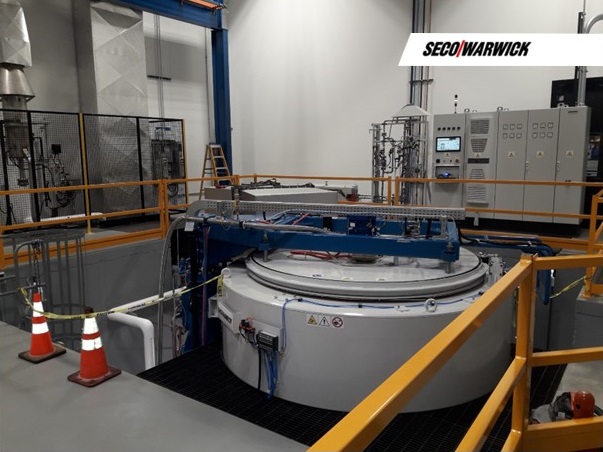
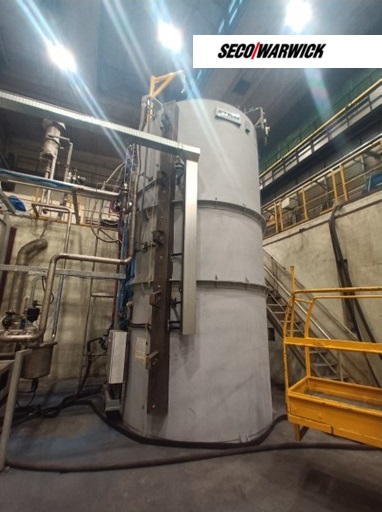
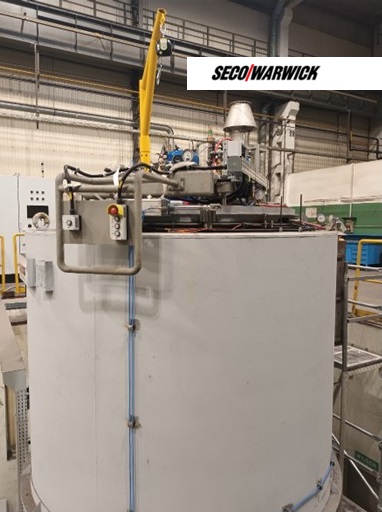
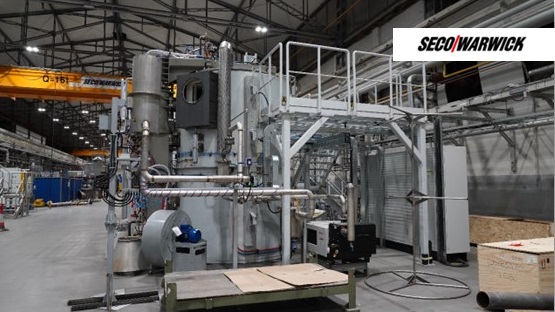
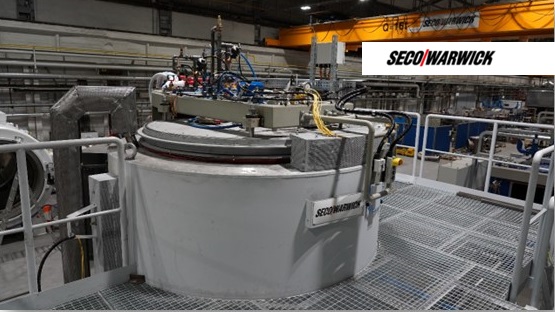
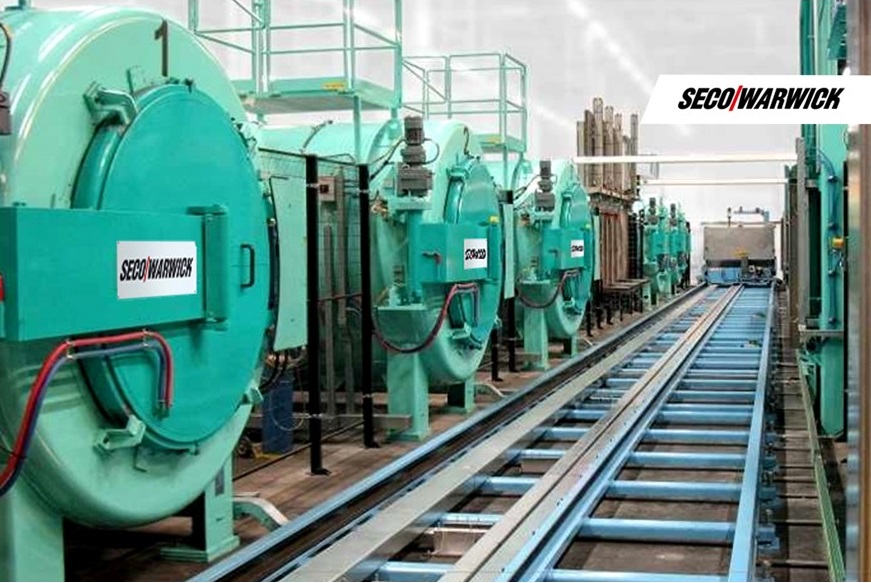
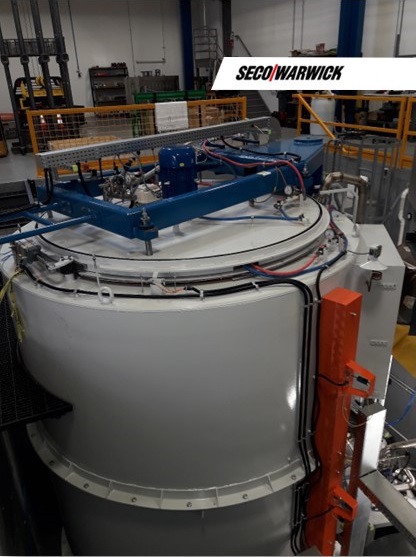
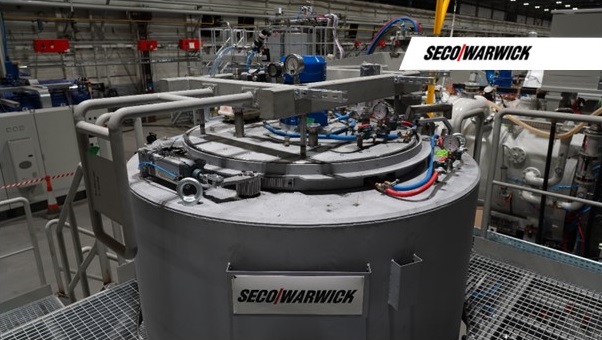
Horizontal type VR and pit type PVR (including automated process lines) furnaces equipped with ZeroFlow technology belong to the family of retort nitriding furnaces with horizontal or vertical loading and vacuum purging, available in a wide range of sizes and workspace capacities. These furnaces are compact, equipped with an internal atmosphere mixer and a cooling gas blower to accelerate the load cooling in the retort. The special design of the retort and heating elements ensure the furnace’s long-term and reliable operation in industrial conditions.
In VR and PVR furnaces, the nitriding process is carried out in automatic mode with the possibility of combining individual devices into automated technological lines for mass production. The furnace can be equipped with nitrocarburizing (FNC) and post-oxidation installations. In addition, these furnaces can be used for a wide range of tempering and annealing processes, which further increases their versatility.
/ Accurate shaping of any nitrided layer composition
/ Maximum efficiency and process performance
/ High quality and repeatability of results
/ Compliance with the environmental protection regulations requirements
/ Furnace’s reliable operation in an automatic cycle
/ Precise control of the nitriding atmosphere directly in the retort
/ High accuracy of temperature control, uniformity +/-3°C
/ Computer control system based on PLC + IPC Siemens standards
/ Full automation and visualization of the heat treatment process
/ Simple and intuitive furnace operation and process recipe preparation
/ Compliant with AMS-2750, AMS-2759 and CQI-9 standards
/ Data archiving and reporting system
/ Preventive Maintenance function
/ Remote Diagnostics
/ Compact design
The benefits of ZeroFlow nitriding over traditional processes are:
/ Minimal ammonia consumption, just to supply the necessary amount of nitrogen to the treated details in the tightly closed furnace (as opposed to the traditional process where the atmosphere is continuously flowing through the open furnace and only a small amount is used for nitriding).
/ Ability to use ammonia alone as the most efficient nitrogen carrier (without dilution with other gases, e.g., nitrogen or dissociated ammonia).
/ The utilization of the furnace vacuum evacuation (instead of traditional purging with process gases), which significantly reduces the consumption of process gases (ammonia and nitrogen).
/ Precise and dynamic process control by directly measuring and controlling the nitriding atmosphere composition inside the furnace using only ammonia and internal dissociation.
/ It ensures very high accuracy of forming the required nitrided layer.
/ Internal dissociator IAD – same precision without energy losses
/ Minimal operational costs
/ Process simulator: ZeroFlow Feedback Control
/ Automotive industry:
e.g., brake discs, gears and pinion shafts, hydraulic pump components, crankshafts and camshafts, sleeves, valve springs, suspension springs, piston rings and pins.
/ Aerospace industry:
e.g., gears and pinion shafts, transmissions, etc.
/ Machine industry:
e.g., sleeves, pins, shafts, rings, cylinders.
/ Tool industry:
e.g., cutting tools, forging dies, dies for extruding aluminum profiles, die inserts, screws of plastic injection molding machines, mold parts for aluminum casting, press molds, forming fittings, etc.
/ Commercial Heat Treatment
e.g., brake discs, gears and pinion shafts, hydraulic pump components, crankshafts and camshafts, sleeves, valve springs, suspension springs, piston rings and pins. sleeves, pins, shafts, rings, cylinders. cutting tools, forging dies, dies for extruding aluminum profiles, die inserts, screws of plastic injection molding machines, mold parts for aluminum casting, press molds, forming fittings, etc.
/ Fabricated metal products
e.g., gears and pinion shafts, hydraulic pump components, crankshafts and camshafts, sleeves, valve springs, suspension springs, piston rings and pins. sleeves, pins, shafts, rings, cylinders. cutting tools, forging dies, dies for extruding aluminum profiles, die inserts, screws of plastic injection molding machines, mold parts for aluminum casting, press molds, forming fittings, etc.
/ Machine-building
e.g., brake discs, gears and pinion shafts, hydraulic pump components, crankshafts and camshafts, sleeves, valve springs, suspension springs, piston rings and pins. sleeves, pins, shafts, rings, cylinders. cutting tools, forging dies, dies for extruding aluminum profiles, die inserts, screws of plastic injection molding machines, mold parts for aluminum casting, press molds, forming fittings, etc.
/ Mint
e.g., cutting tools, forging dies, die inserts, screws of plastic injection molding machines, mold parts for aluminum casting, press molds, forming fittings, etc.
/ Fasteners
e.g., cutting tools, forging dies, die inserts, screws of plastic injection molding machines, mold parts for aluminum casting, press molds, forming fittings, etc.
/ Nitriding
/ Nitrocarburizing (FNC)
/ Post-oxidation
/ Tempering
/ Annealing
/ Others
ZeroFlow gas nitriding process:
/ Nitriding takes place in a tightly closed retort with forced atmosphere circulation.
/ The nitriding process is controlled by partial or complete closing of the ammonia inflow to the retort and controlled ammonia dissociation inside the retort.
/ During Zeroflow nitriding, the temperature and nitrogen potential KN are controlled based on the measurement of the hydrogen content in the retort (and not at the furnace gases outlet). The current value of the nitrogen potential (KN) is compared with the set value (according to the recipe) and automatically regulated by the PLC control system by periodically dosing ammonia with a mass valve according to the PID algorithm.
/ The atmosphere discharged from the furnace is disposed of in order to meet the requirements of gas emissions to the environment.
/ The controlled atmosphere emissions are processed through appropriate neutralizing equipment such as VOC Thermal Oxidizer prior to being vented into the environment, in accordance with local emissions regulations.
Green nitriding using the ZeroFlow method:
/ Process control ensures nitrogen is directed to the heat-treated parts for minimal ammonia consumption
/ Ammonia demand is significantly reduced, up to 10 times less than traditional technology
/ Minimal emission of post-process gases meeting environmental protection requirements
/ Vacuum purging instead of gas purging reduces inert gas utilization
/ Precise building of any nitrided layer build-up, configuration, maximizing process efficiency
/ Nitrocarburizing carried out effectively and efficiently using methanol
What is ZeroFlow nitriding?
ZeroFlow nitriding is a gas nitriding method developed and implemented by SECO/WARWICK in cooperation with scientists from the Poznań University of Technology.
How long has ZeroFlow nitriding been used in industry?
ZeroFlow nitriding was developed 20 years ago and was implemented in industrial applications almost immediately.
How many ZeroFlow installations operate in industry?
More than 100 ZeroFlow nitriding systems are currently operating worldwide.
How does ZeroFlow differ from conventional gas nitriding?
The phenomena involved and the operating principle of the process are identical to those of conventional gas nitriding; the difference lies in the method of implementation.
What distinguishes ZeroFlow nitriding?
ZeroFlow nitriding from SECO/WARWICK is distinguished by the use of ammonia only as the process gas, and in minimal quantities required to build the specified layer.
What is the origin of the name ZeroFlow?
The name comes from a unique process feature in which nitriding takes place in a tightly sealed furnace without any ammonia inflow (or any other gases) – zero flow – ZeroFlow.
Can ZeroFlow replace traditional nitriding?
Yes, in every case.
Can ZeroFlow nitriding be applied in a conventional furnace?
No, not if the technological advantages of ZeroFlow are to be utilized.
What benefits does ZeroFlow nitriding provide?
The benefits of ZeroFlow nitriding cover many areas, the most important of which are: cost reduction, quality, operationand environmental impact.
What cost-related benefits does ZeroFlow offer?
ZeroFlow ensures minimal ammonia consumption, only for the purpose of building the required layer. Continuous atmosphere flow is not required, unlike in traditional furnaces.
There is no ammonia consumption for supplying dissociated ammonia for nitriding process control. In ZeroFlow, the acceleration of ammonia dissociation required by the process occurs in the working space via an integrated (internal) dissociator. This reduces ammonia and energy consumption.
Vacuum purging reduces ammonia and nitrogen consumption, shortens process time,and lowers energy usage.
What quality-related benefits does ZeroFlow offer?
The key advantages of ZeroFlow nitriding can be grouped into five areas:
- The ability to use ammonia alone as the most efficient nitrogen carrier (without dilution with other gases such as nitrogen or dissociated ammonia).
- Minimal ammonia demand, limited only to supplying the necessary amount of nitrogen to the treated parts in a tightly sealed furnace (as opposed to traditional processes where the atmosphere continuously flows through an open furnace and only a small portion contributes to nitriding).
- The use of vacuum pumping of the furnace (instead of traditional purging with process gases), which significantly reduces the consumption of process gases (ammonia and nitrogen).
- Precise and dynamic process control through direct measurement and control of the nitriding atmosphere composition inside the furnace using ammonia alone and internal dissociation.
- Ensures very high accuracy in forming the required nitrided layer at minimal operating costs.
What are the environmental advantages of ZeroFlow nitriding?
The most important environmental benefit of ZeroFlow nitriding is the minimal ammonia requirement. ZeroFlow nitriding from SECO/WARWICK uses only ammonia to deliver the required nitrogen to the processed parts in a tightly sealed furnace, resulting in minimal post-process gas emissions.
How does a ZeroFlow retort furnace differ from a conventional nitriding furnace?
The fundamental differences between a traditional nitriding furnace and a modern ZeroFlow nitriding furnace can be divided into three areas:
- The ZeroFlow retort furnace design allows for safe operation without gas flow through the furnace, which is tightly sealed.
- No external dissociator is required.
- For process control (Kn), only one gas analyzer is used – a hydrogen analyzer connected directly to the furnace retort, without the need to extract an atmosphere sample.
How is the ZeroFlow nitriding process controlled?
Through regulation of the nitriding potential Kn, similarly to traditional processes. The nitriding atmosphere potential Kn defines its ability to introduce nitrogen into the surface.
How is Kn determined?
The nitriding potential is defined as the ratio of the partial pressures of ammonia and hydrogen in the atmosphere, according to the formula below, with reference to the chemical reaction accompanying the nitriding process. It is calculated based on readings from a hydrogen-content sensor.

How is the nitriding atmosphere composition measured?
In traditional processes, analyzers for both ammonia and hydrogen concentrations are required.
In ZeroFlow nitriding, only a hydrogen analyzer is sufficient.
Why does ZeroFlow use only one hydrogen analyzer?
Because ZeroFlow uses only ammonia, the nitriding atmosphere is stoichiometric (reactants and products are in fixed proportions). This means that the hydrogen concentration determines the ammonia concentration and vice versa. Therefore, knowing the concentration of one gas is sufficient to determine the concentration of the other and to calculate Kn.
In traditional processes that additionally use dissociated ammonia or nitrogen, the atmosphere is not stoichiometric, and two analyzers are required: one for ammonia and one for hydrogen.
Which process is more precise?
ZeroFlow nitriding is the most precise process because the atmosphere is stoichiometric and uses a single hydrogen sensor to measure the atmosphere directly inside the retort.
Traditional nitriding uses two analyzers, which doubles measurement errors and requires continuous atmosphere discharge to the ammonia analyzer (atmosphere loss).
Why does ZeroFlow use only ammonia for process control?
Using only ammonia in ZeroFlow is because it supplies nitrogen to the process and does not require dilution with other gases (typically dissociated ammonia or nitrogen).
Why are dissociated ammonia or nitrogen used in traditional nitriding processes?
These gases are used to dilute ammonia and reduce the nitriding potential, Kn.
How is Kn reduced in ZeroFlow nitriding processes?
It is reduced using an integrated dissociator located inside the retort, which accelerates ammonia dissociation directly in the retort, without ammonia loss and without the energy consumption of an external dissociator, as is the case in traditional nitriding.
What is the ZeroFlow Feedback Control process simulator used for?
The simulator is a tool that supports the development of a recipe to achieve the required result in the form of a nitrogen profile and structure.
The process is not intuitive, and its results cannot be easily predicted without simulator support.
How accurate is the simulator?
The simulator enables precise selection of recipe parameters to achieve the required result.
It effectively limits the need for numerous trials and tests for new processes.