



CAB Brazing - Aluminum Brazing with Flux
|

Controlled Atmosphere Brazing was developed by Alcan, under their trade name NOCOLOK®, as a non-corrosive flux brazing process and is now established as the accepted process for brazing of aluminum heat exchangers.
Aluminum brazing involves joining of components with a brazing alloy (cladding) whose melting point is appreciably lower than that of the parent material (base alloy). The cladding is typically placed adjacent to or in between the components to be joined and the assembly is heated to a temperature where the cladding material melts and the parent material does not. Upon cooling, the cladding forms a metallurgical bond between the joining surfaces of the component. The brazing process occurs in a furnace under the following parameters:
Operating Temperature 580 degrees C to 620 degrees C
Part Temperature Uniformity of ± 3 degrees C
Oxygen free, Nitrogen Atmosphere of -40 degrees C and 100 ppm of O2 content
In automotive heat exchanger applications, the cladding is supplied via a thin sheet on the base alloy. The base alloy provides the structural integrity while the low melting point cladding melts to form the brazed joints.
Why the need of flux? Once the flux is molten inside the furnace, the flux works to dissolve the tenacious oxide layer that is present on the aluminum surface and prevent further oxidation. By dissolving this oxide layer the flux wets the faying surface of the components to be joined allowing the filler metal (cladding) to be drawn freely into the joints by capillary action. Upon cooling the flux remains on the surface as a thin film.
During furnace brazing, a brazing sheet, fig. 2, of aluminum silicon alloy plate (cladding) is heated to a liquid state and flows to form aluminum joints or fillets. A sample fillet is shown in fig. 3
|
Getting the Product Ready for Processing |
 |
 |

|
Cleaning
In order for proper brazing to occur, the products must be prepared for brazing. The first step is to clean the products of all oils, dirt, etc. prior to the fluxing process. This can be accomplished by utilizing a Thermal Degreasing Oven or an Aqueous Washer.
|
Flux Application Methods
After the products are cleaned, a wet flux slurry
is applied to the core by means of spraying for external coverage and
dipping for internal coverage. The flux is mixed into a slurry form
using treated water or de-ionized water, which prohibits natural salts
from being deposited on the heat exchanger. |
Dry Off Oven
The dry off oven is the final preparation before brazing. The purpose of the dry off oven is to remove the water present from the fluxing stage so that the heat exchanger is free of moisture prior to entering the braze furnace. |
Furnace Design Selection
|
 |
 |

|
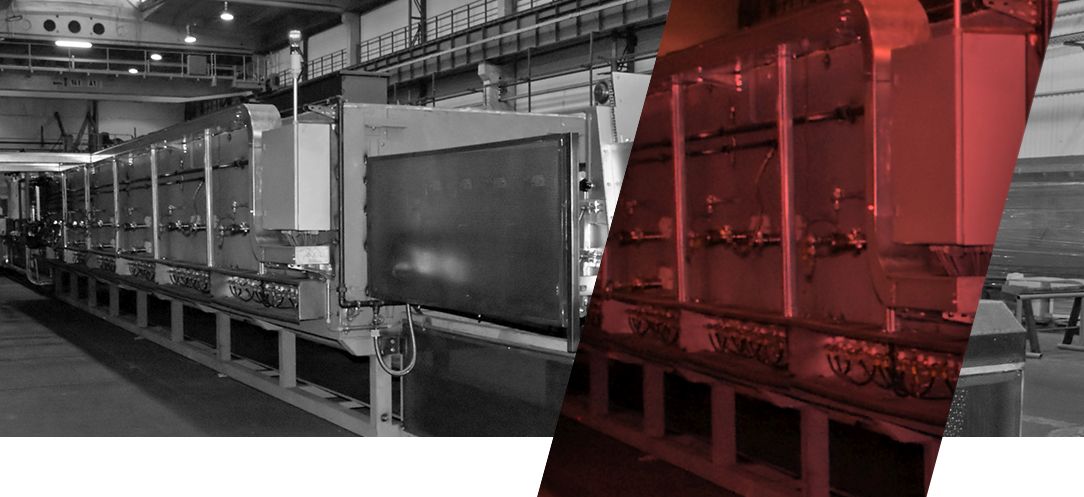
Radiation Furnace
Style: Continuous
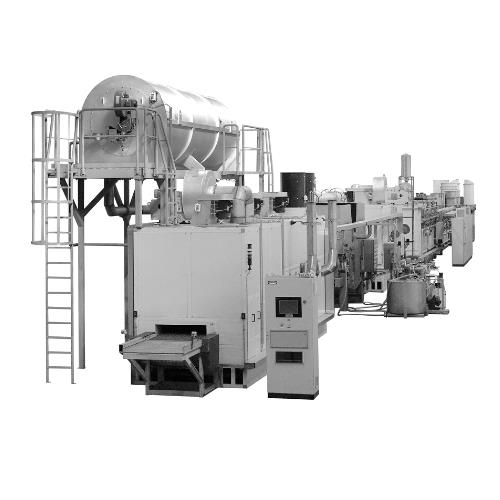
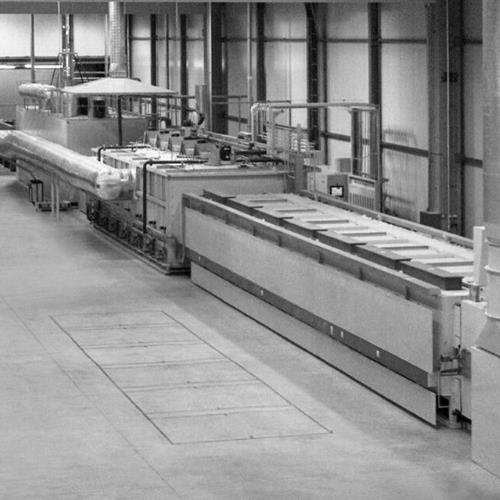
A Radiation CAB Furnace is an ideal method for brazing similar size products in a continuous flow environment. If you intend to produce a single or only a few variations of that product, a radiation furnace system makes sense. |
Radiation w/Convection Preheat
Style: Continuous
When your brazing needs are more diverse, a combination of convection preheating and radiation brazing improves the furnace's overall flexibility, enabling manufacturers to braze products of different mass and dimensions without changing the furnaces set point parameters.
|
Convection Furnace
Style: Continuous
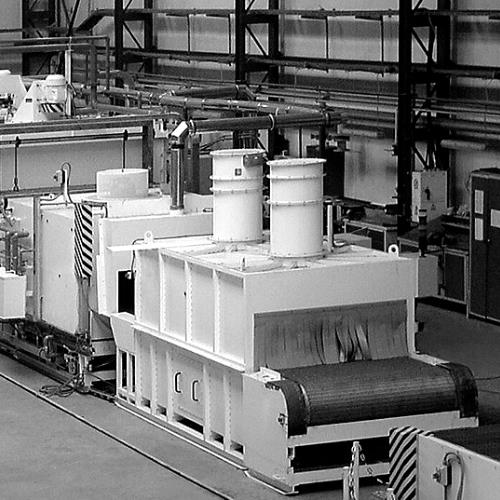
A pure convection heated furnace is the most efficient means to braze a wide variety of heat exchangers in the shortest possible cycle time. Convection heating is the best means to bring the entire heat exchanger (fins, tubes, headers) to brazing temperature in the recirculated nitrogen atmosphere. |
 |
 |

|
Active OnlyŽ
Style: Semi-continuous
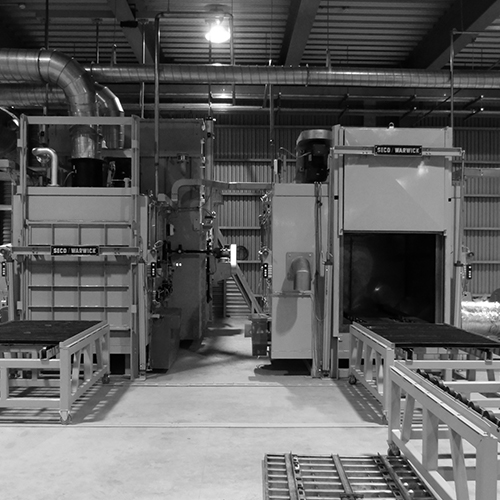
The Active Only Semi-Continuous CAB Aluminum Brazing Furnace system is an indexing furnace designed to meet the needs of aftermarket manufactures or companies that have a wide variety of production needs from day to day. The furnace is designed to braze 3 to 5 load areas per hour on a semi-continuous basis. |
Vacuum Purge
Style: Batch
The vacuum purge batch CAB furnace is an advanced hot wall, front loading retort furnace with vacuum purging especially designed for CAB brazing. The standard furnace hot zone is 600 mm x 600 mm x 900 mm, however SECO/WARWICK can custom engineer furnaces to suit the application This system is ideal for R & D projects.
|
Vertical Furnace
Style: Batch
A variation of the Active Only® furnace system is an electrically heated batch furnace with heating elements positioned horizontally. For certain applications, this product orientation improves the cladding melting process. Vertical positioning of the heat exchanger allows the joints to be evenly filled on a horizontal plane. This prevents the brazing alloy from accumulating on one side of the heat exchanger |
Precision Controls, Quality Muffles |
ACCUBRAZE® Control System
Convection heating with accurate temperature control and uniformity are essential when running loads with varying masses and configurations one after another. The braze furnace is controlled by a PC/PLC based system utilizing ACCUBRAZE software developed by the SECO/WARWICK.
|
CAB Furnace Muffles
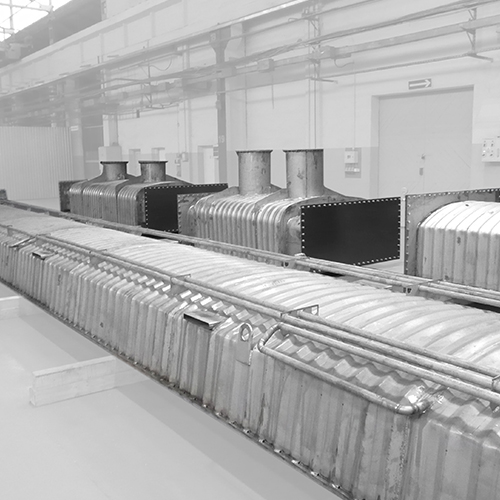
SECO/WARWICK began to design and manufacture muffles in-house in 1995 after rejecting poor quality work and long lead times from outside sources. We recognized that we could build a better quality muffle in our plant, providing customers with better value and expedited delivery. Today, SECO/WARWICK maintains the engineering intelligence for both SECO/WARWICK and Camlaw brand controlled atmosphere brazing furnace muffles. SECO/WARWICK has the technical expertise and original drawings to provide you with a muffle that will correctly fit your furnace.
|
Aluminum Brazing Product Brochure , .pdf format |
Brochure BZ-134.2 CAB Brazing Systems, our complete product line of CAB furnaces (English)
Return to Top |