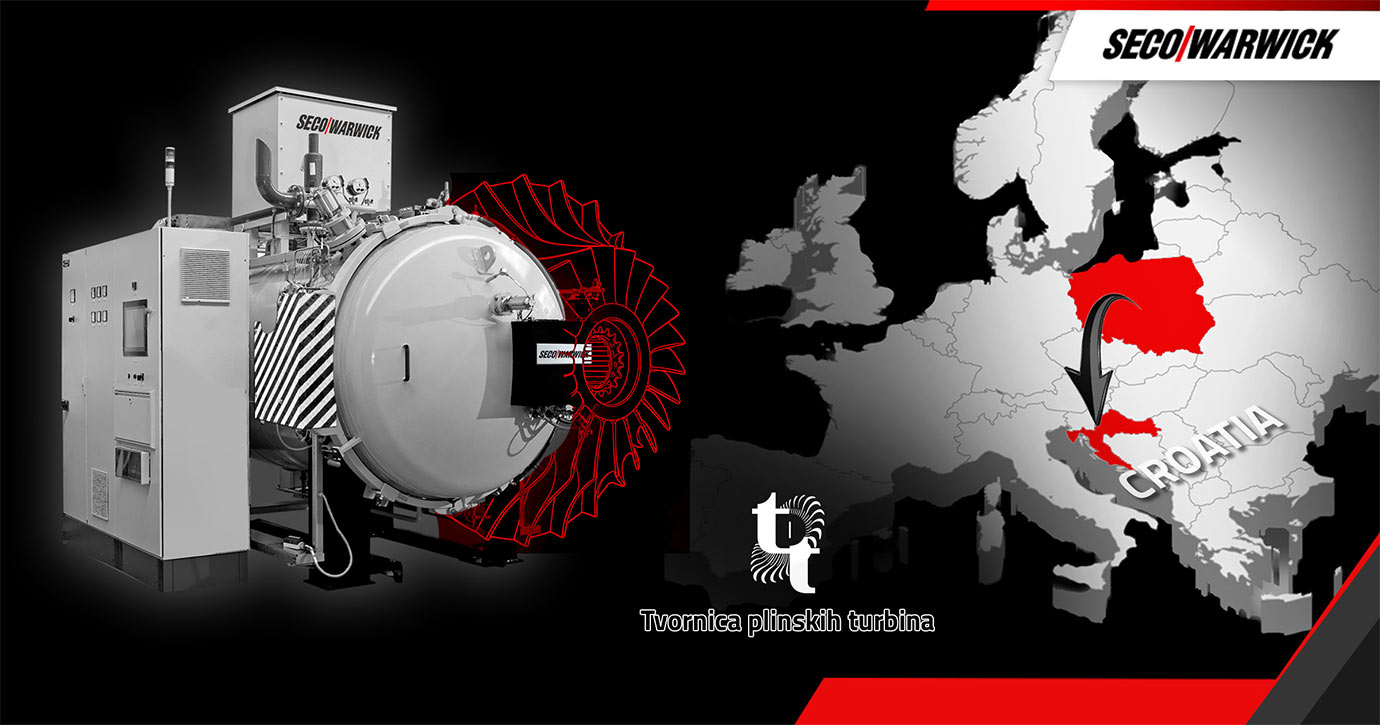




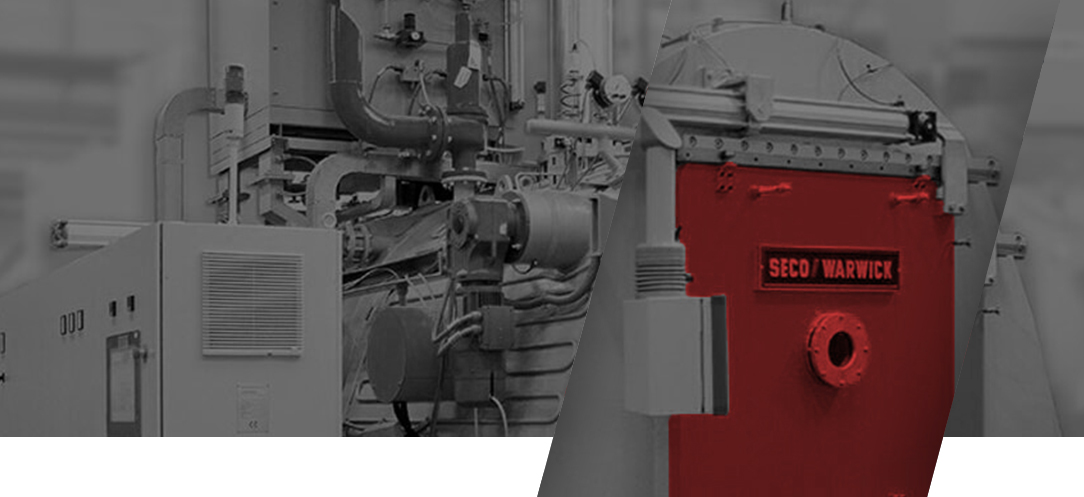
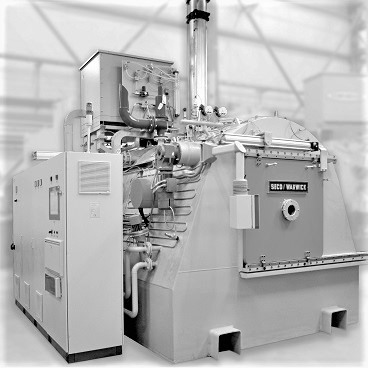
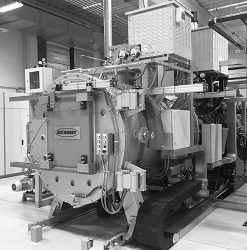
CaseMaster Evolution – double- or triple-chamber vacuum furnace
Vacuum furnaces for low-pressure carburizing (LPC) and oil quenching or high-pressure gas quenching in high-volume production.
/ Design & Purpose:
CaseMaster Evolution double- or triple-chamber furnaces are intended for low-pressure carburizing (LPC), low pressure carbonitriding (LPCN) and oil or high-pressure gas quenching in small, medium and high-volume production.
/ Applications:
This family of vacuum furnaces is dedicated to semi-continuous case hardening by LPC and oil or high-pressure gas quenching, as well as through hardening. It offers a wide alternative to atmospheric sealed quench furnaces, continuous lines, and multi-chamber systems.
/ Versatility:
Beyond its core applications, CaseMaster Evolution can be used for a variety of other heat treatment processes such as annealing or brazing.
/ Industry Focus:
A new generation of sealed quenching solutions, providing an additional option for a wide range of LPC applications in industries such as aerospace, automotive, machine-building, bearings, and commercial heat treatment.
-
 Low Pressure Carburizing (LPC),
case and through hardening
integral oil quench (OQ)
vacuum multi-chamber furnace
Low Pressure Carburizing (LPC) case and through hardening integral atmosphere oil quench (AOQ) Super IQ
Low Pressure Carburizing (LPC),
case and through hardening
high pressure gas quench (HPGQ)
vacuum multi-chamber furnace
GENERAL
What exactly is Low Pressure Carburizing (LPC)?
Low Pressure Carburizing, also known as Vacuum Carburizing, is a modern method of carburizing used mainly in surface hardening of steel. The technology introduces carbon into the surface of the material under vacuum conditions, which ensures excellent control over the process, high cleanliness, and predictable results.
Is LPC a mature and widely used technology?
Yes — absolutely. Although research on LPC began in the 1960s and 1970s, the large‑scale industrial implementation started in the 1990s. Today, an estimated 10–20% of all carburizing worldwide is done using LPC, and this share continues to grow each year. Most new investments in carburizing technology are already vacuum-based.
Is LPC accepted across the industry?
Yes. The method is compliant with global standards and is widely used in industries requiring very high quality and process stability.
Can LPC replace traditional atmospheric carburizing?
Yes — in every case. There is a global shift underway in which conventional atmospheric furnaces are being replaced with vacuum furnaces for LPC due to their performance, safety, and quality advantages.
ADVANTAGES OF LPC
Why are companies switching from atmospheric carburizing to LPC?
Several reasons drive this transition. LPC offers far better process efficiency and lower energy costs, supports full automation and repeatability, guarantees perfect surface quality and carbon profiles, and eliminates the specific safety risks associated with reactive atmospheres. Additionally, atmospheric carburizing has reached its technological limits, while vacuum technologies continue to evolve rapidly.
How does LPC improve productivity and reduce costs?
LPC cycles can be several times shorter than atmospheric processes because vacuum furnaces can operate at higher temperatures. Shorter cycles mean increased throughput, lower energy consumption, and lower operating costs. LPC also uses significantly less process gas, further reducing direct production expenses.
How does LPC support automation and ease of operation?
Vacuum carburizing furnaces operate fully automatically. They do not require constant supervision, manual atmosphere control, or ongoing operator intervention. They can be started or stopped on demand, with no lengthy conditioning or controlled cooling procedures required — unlike atmospheric systems.
How does LPC improve surface quality and carburizing uniformity?
Because LPC is performed under vacuum using non‑oxidizing gases, it completely eliminates intergranular oxidation. The surface remains clean, and the process achieves excellent uniformity of carburizing — even for tightly packed loads or components with complex geometries such as narrow or blind holes.
Is LPC safer than traditional carburizing?
Yes — significantly. The carburizing atmosphere in LPC is contained within a sealed vacuum chamber, where its density is over 100 times lower than atmospheric pressure. There is no open flame, no combustion of excess gases, and no presence of toxic CO. Process gases are removed through a closed vacuum pumping system, ensuring inherently safer operation.
How does LPC perform in terms of environmental impact?
LPC consumes less energy and emits less heat, vapor, and contaminants. The process produces no CO₂, and furnaces can be installed directly in clean production areas next to CNC machines without risk of contamination.
PROCESS PHENOMENA AND CARBURIZING GASES
How does LPC differ from atmospheric carburizing?
The primary difference lies in the type of carbon‑carrying medium and how carbon is delivered to the material’s surface. LPC uses oxygen‑free hydrocarbons (mainly acetylene), whereas atmospheric carburizing relies on CO‑based atmospheres.
Which gases are used as carbon carriers in LPC?
The most commonly used gas is acetylene (C₂H₂). Other hydrocarbons such as ethylene or propane can also be used but are less common.
Why is acetylene the preferred gas for LPC?
Acetylene has excellent thermal stability and a high carbon content (92%). It decomposes cleanly without increasing gas volume and provides a very high carbon transfer efficiency — typically 30–50%, compared to below 1% in atmospheric carburizing.
How is carbon delivered to the steel surface in LPC?
Acetylene is introduced through strategically placed nozzles into the vacuum chamber. In vacuum and process temperature, the gas spreads rapidly and reaches all surfaces of the load. On the material surface, acetylene decomposes catalytically, depositing carbon that diffuses into the steel while hydrogen is released as gas.
Is there any limit to the amount of carbon that can be supplied?
In practice, no. LPC can supply so much carbon that excess forms soot on the surface — which is undesirable but demonstrates that the process is not limited by atmosphere saturation.
How is the LPC process controlled?
LPC is controlled by measuring and adjusting the carbon flow — meaning the quantity of carburizing gas fed into the chamber. This differs from atmospheric processes, which control the carbon potential of the gas atmosphere.
Do LPC and atmospheric processes share anything in common?
Yes. Although carbon is supplied differently, once carbon reaches the material, the diffusion mechanism follows the same physical laws and depends on material chemistry and temperature.
OPERATION, PARAMETERS, AND LIMITATIONS
How do vacuum furnaces differ from atmospheric furnaces?
Vacuum furnaces operate in a sealed steel chamber capable of achieving pressures around 10⁻¹ hPa. Their heating chambers are typically made of graphite materials capable of withstanding temperatures above 1200°C.
Atmospheric furnaces are open to the environment, use ceramic or metallic chambers, and typically operate at 900–950°C.
What temperatures are used in LPC?
Standard steels can be carburized up to about 980°C. Micro‑alloyed steels designed to limit grain growth can be carburized up to 1050°C. In some cases, all steels can be carburized at such high temperatures if followed by a grain-refinement treatment.
Why is the carburizing gas supplied in pulses instead of continuously?
Continuous feeding would quickly saturate the surface, causing heavy soot formation and reducing process efficiency. Therefore, LPC is divided into boost (gas injection) and diffusion (no gas) segments, repeated until the required carbon profile is achieved.
Does pressure during gas injection affect the result?
Process results are not significantly influenced by pressure. Pressure mainly affects soot formation — lower pressure generally results in a cleaner process.
Does the gas flow rate matter?
Yes. Higher flow rates improve carburizing uniformity within the load and ensure better penetration of hard‑to‑reach features.
Is there a minimum surface area required for LPC?
No. LPC can be performed even when the carburizing surface is extremely small — no additional ballast surfaces are required.
Does the gas flow need adjustment when surface area decreases?
It is not strictly necessary, but recommended to optimize gas consumption and process cost.
Are there limitations regarding the maximum surface area?
Theoretical limitations exist, but in practice the main constraints are load space, mass, and required uniformity. LPC is generally very flexible in this regard.
What is the composition of post process gas in LPC?
Mainly unreacted acetylene and hydrogen, with small amounts of methane, ethylene, ethane, and trace heavier hydrocarbons.
Why does LPC eliminate intergranular oxidation?
Because neither the carburizing gas nor its reaction products contain oxygen or oxidizing compounds, which are responsible for IGO in atmospheric processes.
Can carbon be removed from the surface in LPC?
No. LPC is a one‑directional process — carbon is delivered to the surface and diffuses inward. The gas has no ability to decarburize the material.
MAINTENANCE OF LPC FURNACES
What does typical LPC furnace maintenance involve?
Key maintenance areas include:
- vacuum pumps (oil and filter replacement),
- heating system insulation (graphite or ceramic materials),
LPC PROCESS SIMULATOR
Why is an LPC simulator necessary?
Because LPC is not intuitive. The simulator allows the engineer to design a process recipe that will produce the desired carbon profile. Without such a tool, predicting results accurately would be extremely difficult.
How accurate is the SimVaC LPC simulator?
SimVaC enables precise selection of process parameters to meet the required carbon profile, eliminating the need for trial runs on new processes.