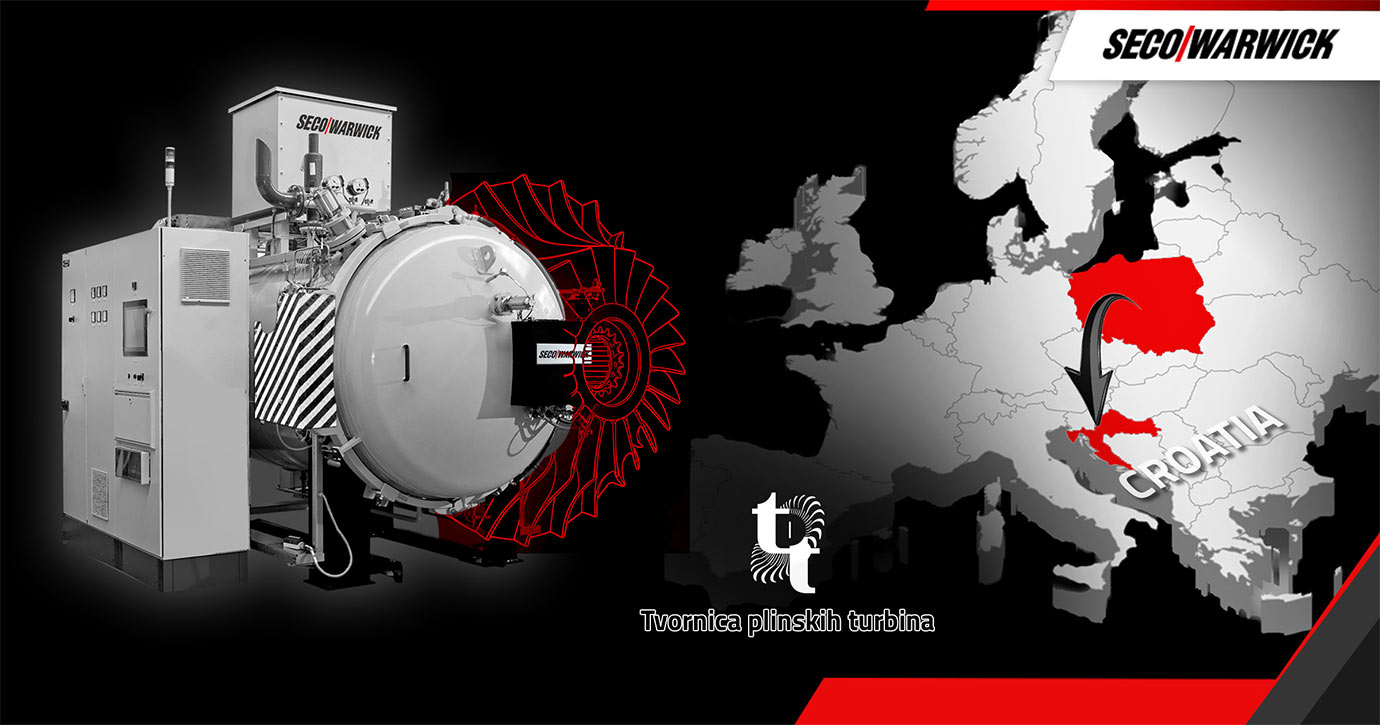




A foundry technology center serving the most demanding industrial sectors in Great Britain, has selected SECO/WARWICK as the supplier of a new vacuum furnace.
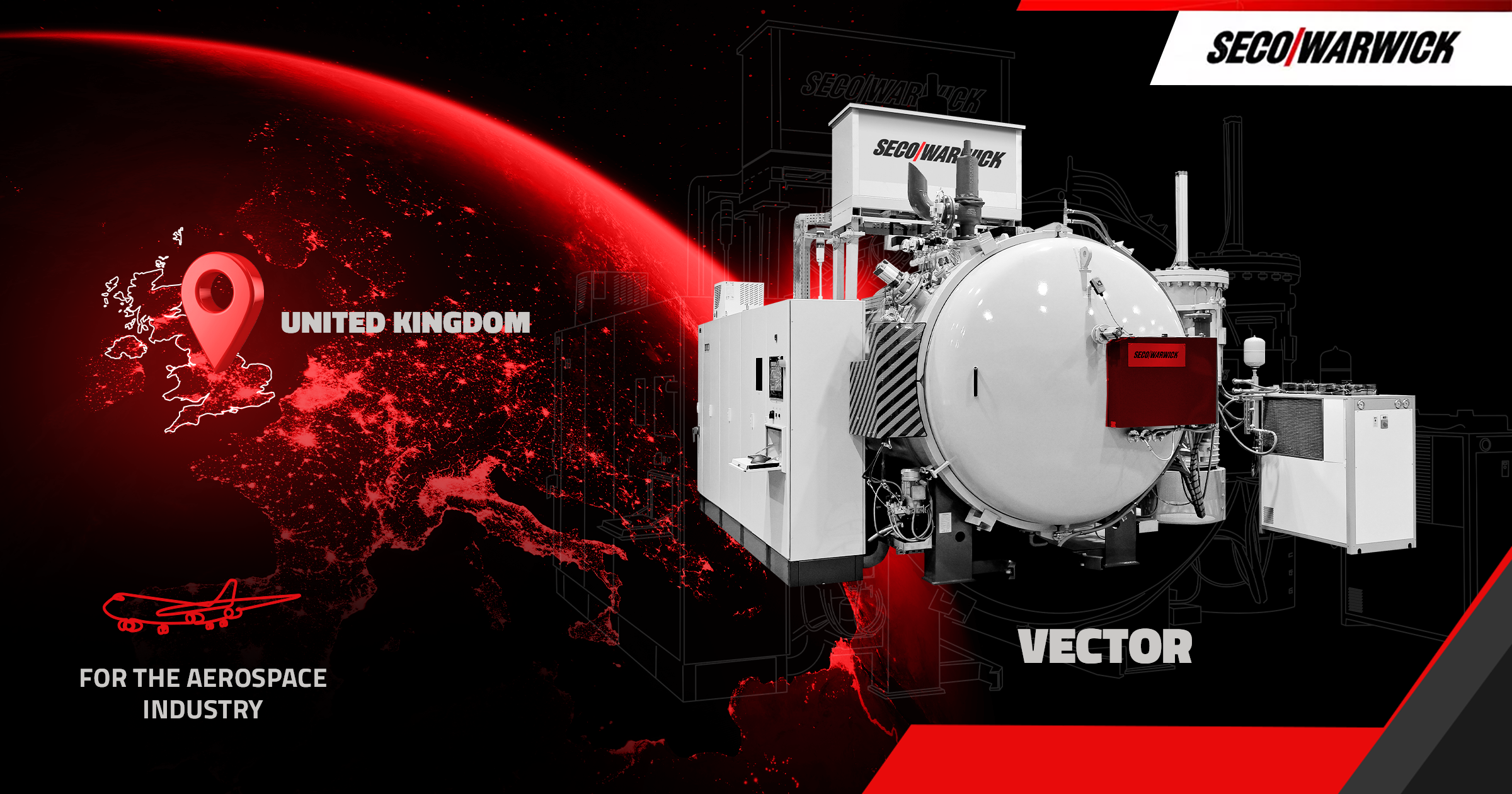
A British partner has commissioned a large-scale SECO/WARWICK Vector vacuum furnace to enhance its heat treatment capabilities for oversized titanium castings in the aerospace and energy sectors.
- New Vector vacuum furnace features a massive 1600 x 1500 x 2000 mm (63″ × 59″ × 79″) work zone.
- Designed for high-cleanliness processing of large titanium alloy castings.
- Includes an advanced high-vacuum system and gas cooling up to 6 bar.
- Features dew-point and partial-pressure control for process stability.
- Expands production capacity for aerospace, energy, and heavy industry.
The Vector vacuum furnace with gas cooling up to 6 bar and a high vacuum system will enable this Partner to expand its heat treatment capabilities for large castings and meet the growing quality requirements of the market. The contract confirms the sector’s trust in SECO/WARWICK technology.
For years, the British company has been developing competencies in advanced material technologies and the production of castings for the aerospace, energy and heavy industry sectors. The new system will increase annealing capabilities for large metal components and relieve the existing heat treatment installations at the plant. The furnace will be used for processing large titanium castings, among other things that require very high process cleanliness and highly uniform temperature distribution.
“The UK market is among the most demanding in Europe—both technologically and in terms of quality. All the more, we’re pleased that this Partner has once again chosen a SECO/WARWICK solution. This contract confirms their trust in our technologies and reflects years of cooperation with a Partner that knows our equipment well, and is satisfied with it. Customer decisions like this are an important sign of recognition for us – and a strong motivation to keep advancing vacuum technologies,” said Maciej Korecki, Vice President of the Vacuum Segment at SECO/WARWICK.
Titanium alloy castings with Vector furnaces
The system on order features a very large work zone of 1600 × 1500 × 2000 mm (63″ × 59″ × 79″), enabling the processing of oversized parts and new types of castings being developed by the customer. The round heating chamber maximizes space and allows the company to load large components while maintaining excellent temperature uniformity.
The furnace is equipped with an advanced high-vacuum system based on two mechanical pumps, a Roots blower, and a diffusion pump. This configuration enables exceptionally clean processing—particularly important when heat treating titanium alloys and other demanding materials.
“This system was designed for heat treating large, demanding cast components. A key advantage of the furnace is its spacious work zone and very good temperature distribution in the heating chamber – achieved in part thanks to additional heating elements installed in the door and the rear wall of the chamber. Combined with an efficient high-vacuum system and gas cooling up to 6 bar, it’s possible to run extremely clean, repeatable annealing processes even for large components,” said Grzegorz Głuchowski, Sales Manager at SECO/WARWICK.
The furnace design also includes a dew point control system to prevent water vapor condensation, as well as a partial pressure system that limits evaporation of alloying elements during vacuum processes. These solutions improve process stability and protect hot zone components from contamination.
The new system will be the second vacuum furnace delivered by the SECO/WARWICK Group to this Partner. Expanding the technology base will enable the company to increase production capabilities and respond even more effectively to the market’s growing demand for advanced metal castings.
This investment confirms the growing role of vacuum technologies in the materials industry and their importance in manufacturing components for sectors with the highest quality requirements. For the market, it is also a clear signal that leaders in the foundry industry are investing in modern heat treatment solutions that enable the delivery of increasingly advanced materials.
The growing role of titanium heat treatment in modern industry
Titanium is characterized by an exceptionally favorable strength-to-weight ratio, very good corrosion resistance, and stable properties at elevated temperatures. These qualities make this material widely used in sectors such as aerospace, energy, space, medical, and chemical processing. To fully leverage the potential of titanium alloys, heat treatment must be tightly controlled to manage the material’s microstructure and achieve the required strength, ductility, and fatigue resistance.
Processes such as annealing, stress relieving, and solution treatment and aging help stabilize the structure of titanium alloys and remove stresses generated during casting, forging, or welding. For many industrial applications, extremely high process cleanliness is also essential, because at high temperatures, titanium readily reacts with oxygen, nitrogen, and hydrogen. For this reason, heat treatment of titanium parts is very often performed in vacuum furnaces or in controlled protective atmospheres that prevent surface oxidation and material degradation. This ensures high process repeatability and maintains the highest surface quality of the components being treated.
The importance of titanium heat treatment continues to grow alongside advances in modern industrial technologies. Today’s aircraft and jet engines incorporate an increasing share of titanium alloys, as they reduce structural weight while maintaining very high strength. At the same time, new titanium alloys and additive manufacturing technologies are emerging – requiring even more advanced, precise heat treatment. As a result, demand is rising for modern vacuum furnaces capable of running processes at high vacuum, ensuring uniform temperature distribution and stable cooling parameters.